The successful conclusion of our project
A year has passed since we initiated our project together with Consufe, Ikigai, and Muutostaito, where we initially aimed to understand what design thinking in teaching involves and, secondly, how to develop this thinking and expertise. Our project received a positive acceptance from service design experts and researchers, as well as the teachers involved in the project. Our project was primarily built around three different phases:
- Theoretical framework: research knowledge and expert interviews
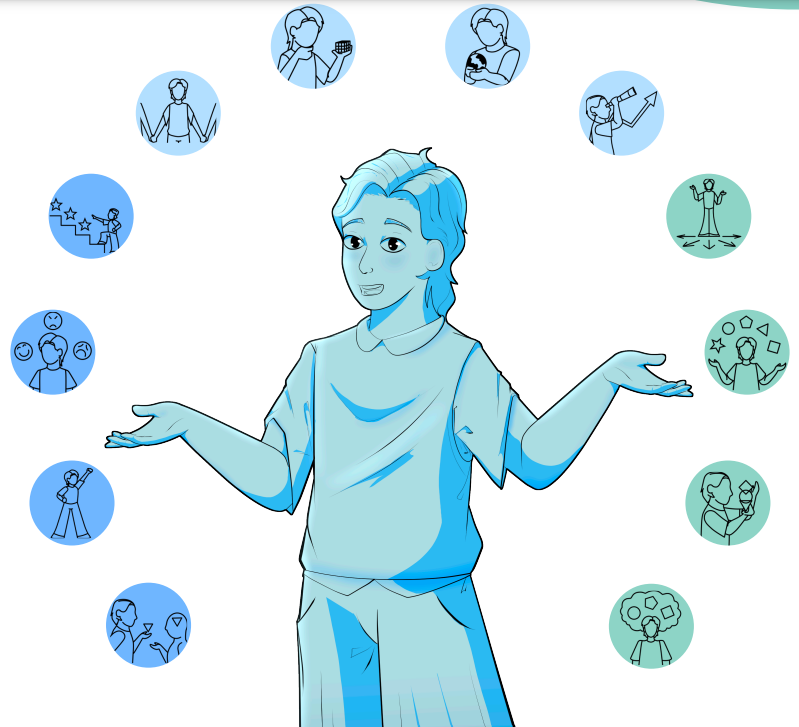
This first phase formed the cornerstone of the project, identifying 12 mindsets at the outset, representing the most important elements of design thinking. This model served as a basis to understand what design thinking in teaching work is at its best, how it is manifested in practice, and which methods should be used to develop these mindsets/capabilities.
- Workshop in Finland – co-development with teachers
In September 2023, we held a 2-day workshop in Finland, attended by teachers from each country (Denmark, Spain, Finland), in addition to the partners. During the workshop, we collectively built an understanding of what design thinking in teaching is, identifying which of the previously recognized 12 mindsets are the most important, and how different learners and their needs should be considered in teaching. Based on collective discussions and workshop activities, we focused on the 5 most crucial capabilities and brainstormed preliminary ideas for the method or methods that should be developed to enhance expertise in this project. The workshop in Finland provided good groundwork for the project team to develop the idea into the first prototype.
- Prototype development, testing and feedback
During the fall of 2023 and early 2024, the project team actively developed the workshop outcomes. Initially, we considered and outlined several prototype options but eventually settled on one called the Learning Card. The idea behind this lightly gamified solution was that teachers could independently practice developing the capabilities needed for service design through a simple method and supporting challenges. In these cards we first introduce the 5 most important mindsets with content description. Secondly, we introduce challenges, exercises, which they can select and do by themselves or with teacher colleagues. As a last part, we added further learning challenges, which they can practice later when they see applicable.
We presented the developed prototype to the teachers, and they tested the method as feasible. The feedback from teachers was encouraging and positive, and based on that, we have further refined the prototype.
Now, in the final stages of our joint project, we believe we have succeeded in our set goals. This is a good point to continue and further develop the method, possibly under a new project. Most importantly, it has been significant for us the project team members, to see that this topic resonates within the professional teaching community, and they feel that design thinking must be incorporated more into teaching now and in the future. The use of design thinking and its supporting development methods in teaching enriches learners, teachers, and the entire educational and training field globally.