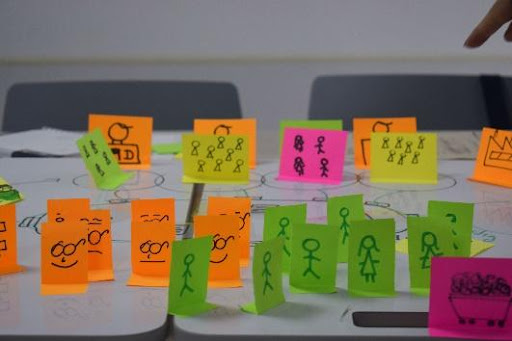
The Complex Web of Designer’s mindsets
Today, we’re taking you into the initial phase of our project: “Teachers as Designers” project, where we embarked on a thorough literature review to identify the core mindsets, characteristics/or competences that drive designers’ practice.
Academic articles were selected using the Educational Research Information Centre (ERIC), SCOPUS database and Google Scholar. Search terms included “design thinking” / “Designer” in conjunction with mindset or characteristics or teacher as designer or traits.
Web of Mindsets
Our journey through the world of literature quickly revealed that defining a concise set of design mindsets was no small task. With each article reviewed and every concept explored, we discovered that these mindsets were intricately intertwined, forming a dynamic ecosystem. Some mindsets seemed to overlap. Some researchers will present a list of 18 mindsets while others would reduce the list to 5 or 7. Some mindsets were undeniably different while others could be two sides of the same coin. It was a puzzle that demanded careful consideration and thoughtful analysis.
Taking a point of departure: the 12 mindsets
After meticulous analysis – a curated list of 12 core design mindsets was proposed to continue the project journey. These mindsets are cornerstones upon which designers build their practice, and we believe that those mindsets can provide great contribution for teachers’ practices. At this point, we are not sure that we will continue with all the 12 mindsets, but they are our point of departure:
- Uncertainty, ambiguity, and Risk
- Empathy and human centeredness
- Creativity
- Experimentation
- Motivation and Optimism to create value
- Ethics and responsibility
- Problem solving
- Emotional intelligence
- Learning oriented
- Visual thinking
- Collaboration, openness, and diversity
- Confidence
Stay tuned for the next chapter: Conversations with Designers
While the literature review has provided us with a foundational understanding of these designers’ mindsets, we recognize that there’s more to explore, that’s why our next step in the project is to engage in conversations with designers from diverse fields and experiences, to get their views, uses, and understanding about design and their mindsets.